The NFL’s long-standing reputation for tightly policing player celebrations came back into focus during the Detroit Lions’ Week 15 road game against the Los Angeles Rams at SoFi Stadium.
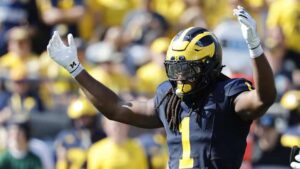
Early in the contest, Lions standouts Amon-Ra St. Brown, Jahmyr Gibbs, and Jameson Williams altered their usual first-down signal. Instead of simply pointing toward the chains, the trio jokingly pretended to pick their noses and flick something forward as part of the celebration.
According to St. Brown, officials were not amused. Speaking on the St. Brown Bros. podcast, which he co-hosts with his brother Equanimeous, the wide receiver said referees quickly intervened. After the opening drive, receivers coach Scottie Montgomery relayed a message from the officiating crew telling the players the gesture was no longer acceptable. St. Brown said he was surprised by the warning, questioning why such a motion would be considered a problem.
The officials made it clear that continuing the celebration would result in a penalty for unsportsmanlike conduct.
This was not the first time Detroit players have run into trouble over celebrations this season. In Week 11 against the Philadelphia Eagles, Williams was flagged after scoring a touchdown and sliding down the goal post following a hug. That action drew a 15-yard penalty, and the league later fined him $14,491.
In that case, the violation was clear, as NFL rules explicitly prohibit using the goalpost as part of a celebration. The nose-picking gesture, while arguably unpleasant, is not specifically identified in the league’s rulebook as an illegal act.
Any discipline related to that motion would instead fall under the NFL’s general taunting guidelines, which define taunting as behavior or language intended to provoke or create hostility between teams. While the league has previously ruled certain gestures—such as the “nose wipe”—as unacceptable, pretending to pick and flick a nose is not directly named among banned actions.
As a result, enforcement is left to the discretion of the officials. If they determine the gesture is directed at an opponent or meant to mock, they are permitted to assess a penalty even if the celebration is not explicitly prohibited.