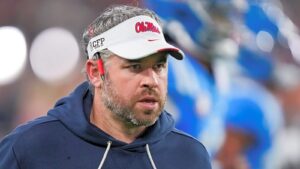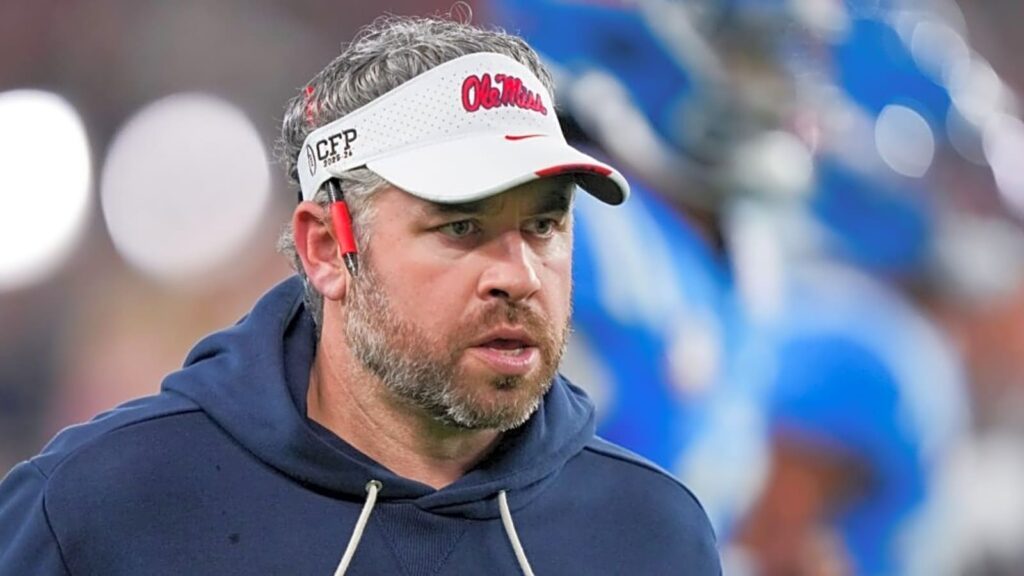
Following his move to a larger position with the Ole Miss Rebels football team, Pete Golding quickly gained prominence, achieving postseason success and making significant strides in the transfer market. For a second, it seemed as though everything was working out flawlessly. However, success is seldom achieved without difficulties.
Off-gridiron noise increased as Golding established his name on the field. Dabo Swinney’s severe accusations and the contentious Trinidad Chambliss case presented a parallel narrative that ran the risk of overshadowing his accomplishments.
The relationship between the Chambliss case and a possible NCAA issue may not be immediately apparent. The danger, however, was quite real. The NCAA might have imposed severe sanctions, which would have placed Ole Miss in a tough situation, had the case gone the other way.
What is the greatest worry? The quarterback area. Golding’s plan for the transfer portal failed to produce a proven backup who could have easily taken Trinidad Chambliss’s place. Ole Miss would have faced a serious lack of depth if Chambliss had been out.
The legal triumph gains more importance as a result. By remaining accessible, Trinidad Chambliss not only averted a defeat in court but also may have saved the Ole Miss Rebels from a “ghost scenario” in the transfer portal, where choices are few, time is running out, and recovery is almost impossible.
Ultimately, Golding’s ascent is still noteworthy, but this incident serves as a reminder that off-field management, legal stability, and roster construction are just as important as winning games.
Although Pete Golding’s challenges are less on the gridiron, the hole at quarterback for the Ole Miss Rebels Football team continues to be a problem.
The attorney for Trinidad Chambliss merits genuine praise for consistently prevailing in disputes with the NCAA and obtaining the quarterback’s eligibility at the most crucial moment. However, being eligible does not imply immunity. Golding’s primary concern with the Ole Miss Rebels football team begins with the injuries, missed games, and unforeseen setbacks that are a part of the sport.
Ole Miss doesn’t have a demonstrated safety net if Chambliss is injured or absent. The mystery of what lies behind him is still unsolved. Although Deuce Knight is a possibility, a coach with momentum should still be wary of depending too much on a 19-year-old quarterback in high-pressure circumstances.
Pete Golding is walking a fine line. One side has stability because Chambliss is in charge of the offense, while the other side has a lack of reliable depth that could cause the season to fall apart quickly. Naturally, college football has a way of creating unexpected heroes. The situation could be handled by Knight—or someone else. However, Ole Miss’ plan is now overly reliant on Chambliss’ availability.
Ultimately, it will be the next season that determines if that faith was a brilliant move or a mistake that cost us dearly.