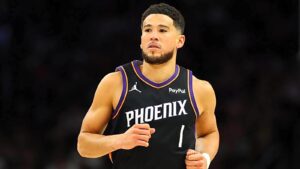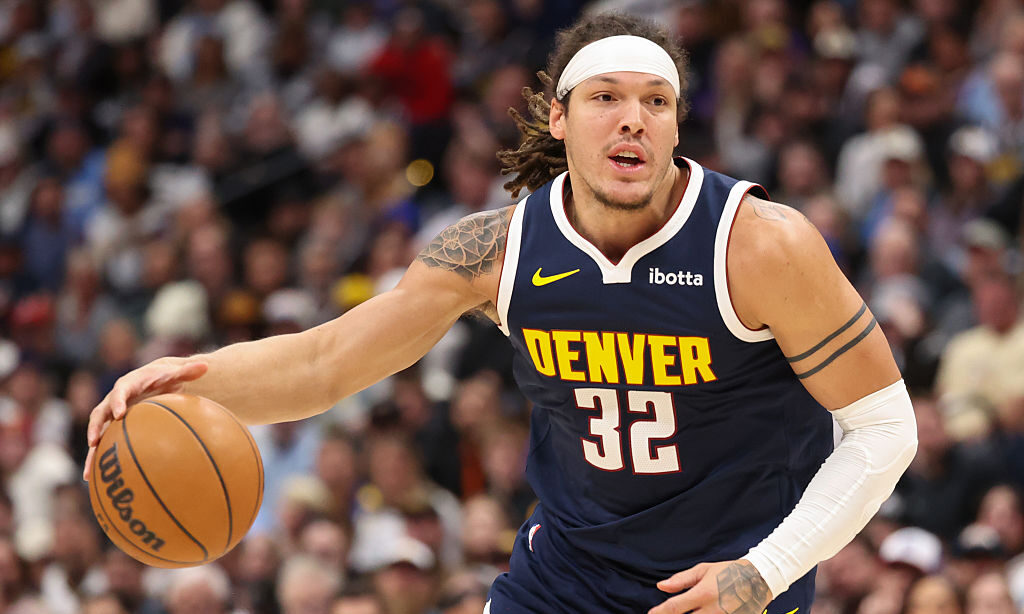
Every postseason has its own rhythm. Teams are removed and replaced with the Phoenix Suns’ current position. The early departure offseason. As these teams book tickets to Cancun, their players’ names become worth considering, assessing, and wondering if they are what your club lacks. It’s the natural order.
The most recent name to attract the attention of Suns fans? Aaron Gordon, a former University of Arizona Wildcat.
I understand. I see the appeal. Power forward has been a troublesome position for some time. The squad has seemed undersized, and it shows up at the basket. The Suns constantly rank near the bottom of the league in terms of scoring around the basket and defending it. So, when a name such as Gordon is mentioned, people begin to connect the dots and picture the match.
The truth is simple. Aside from trading young players, Phoenix does not have much to offer the Denver Nuggets that would move the needle. That is not a feasible agreement in this scenario, so this one appears dead on arrival.
What I do find intriguing, however, is Brett Siegel’s terminology, which describes the Suns as a “win now” club.
That’s where I object. I’ve stated it before, and I’ll repeat it throughout this offseason. The Phoenix Suns are not in “win now” mentality. Teams such as the Denver Nuggets live in “win now” mode. You have an MVP-caliber player, a clear path to a championship, and every decision is focused on extending that window and contending for the top spot in the Western Conference.
That’s not who the Suns are right now. Good, terrible, or neutral, that is the reality. It’s not enjoyable to say. It is not pleasant to listen to. Your team is not in a position to compete for a title next season.
You must still live in reality. And once you embrace that fact, you may begin to devise a plan, both short and long term. A path that places you in a position to join one of those teams in the future. One that can function in “win now” mode when the moment comes.
I feel the Phoenix Suns want to run it back, hoping that health swings more in their favor. Health never fully cooperates; injuries occur. Still, this squad suffered a setback in 2025-26. As a result, they lacked sufficient data to fully understand who they were. We may all have offseason debates about what they should do and how they can work more efficiently. That’s the fun part. I’m in that group. I don’t want to watch three-guard lineups. I would bring Collin Gillespie back as a bench player. I’d like to see Rasheer Fleming in the starting lineup, with Dillon Brooks moving to the three position where he can be a defensive force. That is my perspective. Those aren’t the actions of a team seeking to “win now. “
Yes, the Suns do have some attractive assets. It signifies that national critics will make comments. It will sound as if they are sellers, but while it is irresponsible not to answer the phone and hear offers, it does not imply that they are actively shopping everyone.
The Suns’ top goal this summer should be continuity. Establish a basis and allow it to expand from a consistent location. You shouldn’t plug in new components and expect chemistry to be perfect right away.
I’m now watching Untold: Jail Blazers on Netflix, and one of the key conclusions from Rasheed Wallace, Damon Stoudamire, and Bonzi Wells is how fragile chemistry can be. That squad was 12 minutes away from defeating the Los Angeles Lakers in Game 7 of the 2000 Western Conference Finals. Many of the marginal elements were replaced during the offseason. Shawn Kemp, Dale Davis, and Will Perdue were among the additions. The chemistry suffered, and the club finished as a seventh seed.
That does not mean that the Phoenix Suns disregard the margins. They should definitely use those margins. However, it does not have to be as spectacular or dramatic as the national debate would have it to be. That’s what the fan base has to accept. When names like as Aaron Gordon surface, take note of the clubs connected with the story. You’ll notice instances when franchises attempt to persuade LeBron James to return, or a Boston Celtics squad that lost in Game 7 and is closer to a championship than Phoenix is right now. Both of these teams are “win now” teams as they approach seasons when their window may be closing or is still wide open. That is not where Phoenix is at right now.
Phoenix’s path for next season is obvious. They need to win more games, move up the rankings, and maybe get a round, or two, in the playoffs. That’s a victory. That sets up a new conversation in a year. This isn’t a team that’s in “win now” mode right now. They are creating culture, emphasizing continuity, and doing so in a responsible manner.
This is the point in the cycle when endurance seems like inactivity, even when it is the wiser choice. Phoenix does not need to seek noise to establish purpose; rather, it must define itself with clarity and consistency. Allow the roster to breathe, let roles to settle, and allow advancement to occur at its own pace. If that foundation takes hold, the window that everyone wants to force open now will soon come into focus, and when it does, it will have real meaning.